Why Your Strategy Fails Without a Story

Insights from Vishwanath Akuthota
Deep Tech (AI & Cybersecurity) | Founder, Dr. Pinnacle
The Soul of the Machine: Why Your Strategy Fails Without a Story
In the high-stakes world of technology, we have a fetish for the "fix." When revenue dips, churn increases, or a product launch falls flat, the corporate machine springs into a very specific kind of action. We hire consultants to audit our workflows. We restructure the org chart. We lean into "agile" methodologies, cut the "fat" from the budget, and demand more data-driven insights.
But here is the uncomfortable truth: You cannot optimize your way out of a soul crisis.
When a company loses its way, the problem is rarely the engine. The problem is the driver, the destination, and the reason for the journey. As Steve Jobs famously demonstrated upon his return to Apple in 1997, the most powerful tool in a leader's arsenal isn't a spreadsheet—it’s a story.
The 1997 Masterclass: Fixing Belief Before Circuits
When Steve Jobs walked back into Apple, the company was weeks away from bankruptcy. To any traditional CEO, the "logical" steps were clear: fix the hardware, slash the product line (which he did), and find a way to compete on price with Windows.
But Jobs knew that better hardware wouldn't save Apple if nobody cared that Apple existed.
He launched "Think Different." It was a campaign that featured precisely zero computers. Instead, it featured the rebels, the misfits, and the troublemakers. It wasn't an advertisement; it was a declaration of identity.
Jobs didn't start by fixing the products; he started by fixing the belief. He reminded the employees why they were coming to work and reminded the customers why they should feel proud to own an Apple product. He rebuilt the "soul" of the company, and only then did the iMac, the iPod, and the iPhone become possible. Without the story, the iPhone would have just been another phone. With the story, it was a revolution.
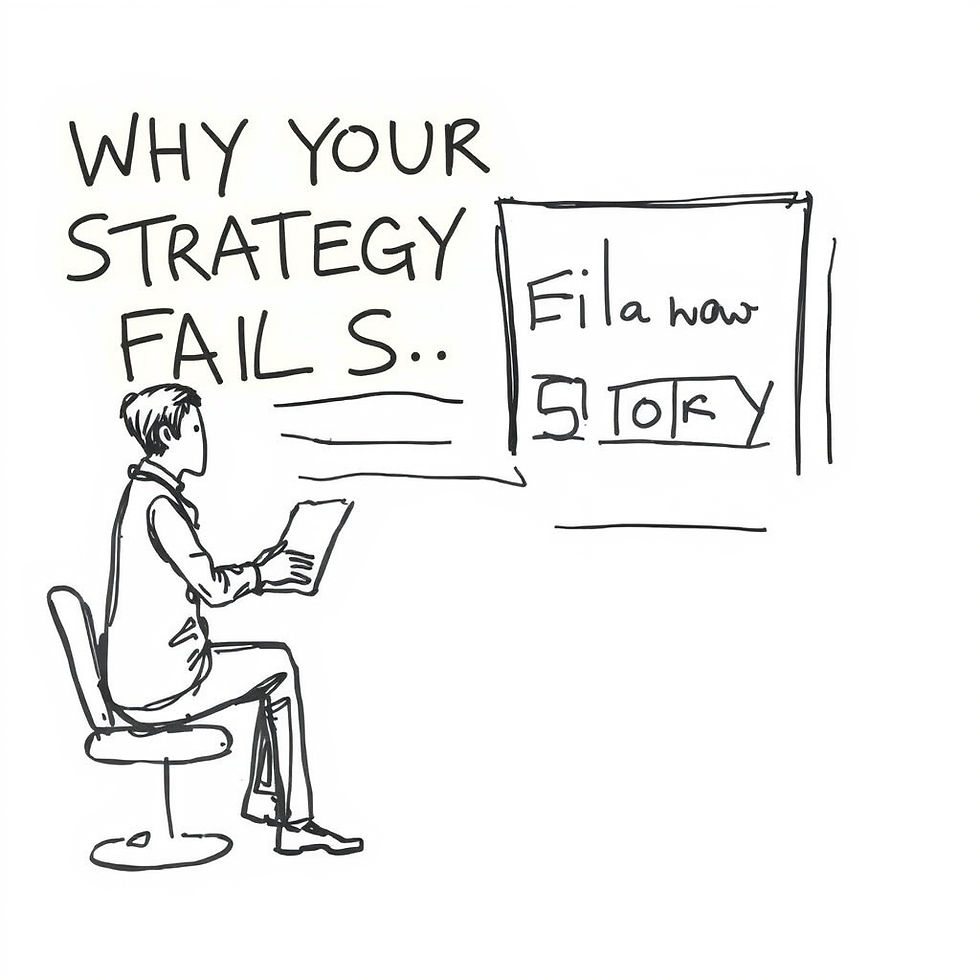
The Grandfather Clock Analogy: Understanding Purpose
To understand why this works, let’s step away from Silicon Valley and look at something more human.
Imagine you inherit an antique grandfather clock. It’s a magnificent piece of craftsmanship, but it has stopped ticking. The wood is dusty, and the chimes are silent.
A technician (the traditional manager) arrives. He opens the back, looks at the brass gears, and starts scrubbing. He oils the pivots, replaces a worn-out spring, and polishes the pendulum. He is focused on efficiency and mechanics. But even after he leaves, the clock feels like an ornament—a dead object in the corner of the room.
A master restorer (the leader), however, approaches the clock differently. He doesn't just look at the gears; he looks at the history. He realizes this clock was built in 1850 to be the heartbeat of a family home. He tells the family the story of the artisan who carved the wood. He explains that the "tick-tock" wasn't just a measure of seconds, but a rhythm for life.
Once the family understands the purpose of the clock, they begin to value it. They wind it every morning. They listen for the chime. Because they care about the "heartbeat," they ensure the mechanics stay perfect.
In tech, your "Story" is the winding of the clock. Without the winding, the most expensive gears in the world are just silent metal.
The Operational Cost of a Lost Story
Why is a missing "soul" so dangerous for a tech company? It isn't just about bad marketing. A lack of purpose creates real, measurable operational friction:
The "Decision Fatigue" Trap
In companies without a clear story, every decision becomes a battle of opinions. Should we add a social feature to our SaaS platform? Should we pivot to AI? Without a core "Why," these questions are decided by whoever has the loudest voice or the most convincing PowerPoint.
The Story Solution: When your purpose is clear (e.g., "We make the world’s most intuitive tools"), the story acts as a filter. If a feature makes the tool less intuitive, the answer is an automatic "No."
The Talent Drain
High-performers in tech—the "A-players"—rarely work for money alone. They work for impact. When a company loses its soul, it starts to feel like a "feature factory." Employees stop asking "How can we change the world?" and start asking "How can I finish my Jira tickets so I can go home?"
The Story Solution: A compelling narrative turns a job into a mission. It gives engineers a reason to stay late—not because they are told to, but because they believe the world is better if their product exists.
The Customer Churn
If your relationship with your customer is purely transactional—"I give you X features for Y dollars"—you are vulnerable. The moment a competitor offers X+1 features for Y-1 dollars, your customer is gone.
The Story Solution: People don't leave a community they feel they belong to. "Think Different" created a sense of belonging. Customers weren't just buying a laptop; they were joining a movement of people who "saw things differently."
How to Reconnect with the Soul (A Leader’s Roadmap)
If you feel your organization is "rearranging deck chairs," here is how you fix the story first:
Step 1: Audit the "Origin Myth"
Go back to the beginning. Why was the company founded? Usually, it wasn't to "optimize 2% of the supply chain." It was to solve a specific pain or to champion a specific group of people. Find that original spark. It’s likely buried under layers of corporate jargon.
Step 2: Kill the "Zombie Projects"
Nothing kills a soul faster than projects that exist for no reason other than momentum. If a product or feature doesn't align with your core story, kill it. Jobs famously slashed Apple’s product line from 350 to 10. Focus is a function of story.
Step 3: Speak to the "Who," Not the "What"
Stop talking about your specs. Stop talking about your "industry-leading" latency or your "cloud-native" architecture. Start talking about the person who uses your product. Who are they? What do they believe in? What are they struggling against?
Step 4: Internal First, External Second
A story is a lie if your employees don't believe it. You cannot "market" your way into a new soul. You must live it internally first. If you say you value "the rebels," but you punish every employee who challenges the status quo, your story is dead on arrival.
The Danger of Optimization Without Purpose
We live in the era of "Big Data." It is tempting to believe that if we just analyze enough metrics, the path forward will appear.
But data can only tell you where you have been. It cannot tell you who you are.
Optimization is a tool for the "How." It is a vital tool, but it is a secondary one. If you optimize a company that has no soul, you simply become more efficient at being irrelevant. You become a very fast car driving in circles.
The Rest Follows
The lesson of the Apple turnaround isn't that marketing is important. The lesson is that human beings are story-driven creatures. Whether you are leading a startup of three people or a multinational corporation of thirty thousand, your primary job as a leader is to be the Chief Storyteller. You are the one who reminds the team that they aren't just building "gears"—they are building the heartbeat of something bigger.
Fix the story. Rebuild the belief. Reconnect with the "Why."
When people—both inside and outside your walls—remember why they give a damn, the engineering, the sales, and the optimization will take care of themselves.
Make sure you own your AI. AI in the cloud isn’t aligned with you—it’s aligned with the company that owns it.
About the Author
Vishwanath Akuthota is a computer scientist, AI strategist, and founder of Dr. Pinnacle, where he helps enterprises build private, secure AI ecosystems that align with their missions. With 16+ years in AI research, cybersecurity, and product innovation, Vishwanath has guided Fortune 500 companies and governments in rethinking their AI roadmaps — from foundational models to real-time cybersecurity for deeptech and freedom tech.
Read more:
Ready to Recenter Your AI Strategy?
At Dr. Pinnacle, we help organizations go beyond chasing models — focusing on algorithmic architecture and secure system design to build AI that lasts and says Aha AI !
Consulting: AI strategy, architecture, and governance
Products: RedShield — cybersecurity reimagined for AI-driven enterprises
Custom Models: Private LLMs and secure AI pipelines for regulated industries
→ info@drpinnacle.com to align your AI with your future.


https://vipwin.help/ nhìn qua thì mình liên tưởng mấy trang hướng dẫn mình từng dùng, có cái thì rối và phải bấm nhiều mới ra đúng chỗ. Ở đây mình vẫn hơi dè chừng lúc mới vào, sợ lại kiểu giấu thông tin sau nhiều lớp, nhưng xem vài phút thì thấy họ đặt mọi thứ khá “lộ” và dễ nắm. Mình không đọc kỹ nội dung, chủ yếu lướt xem bố cục thôi. Các khối thông tin chia theo ô và danh sách nên mắt bắt ý nhanh, kéo xuống cũng mượt. Menu để ngay chỗ dễ thấy, đổi mục không phải quay lại nhiều lần nên đỡ mất thời gian. Có mấy bảng dạng cột nhìn thẳng hàng, chữ…
sc8844.com hôm trước thấy mấy ông bạn nhắc hoài nên mình tò mò bấm vào coi thử cho biết. Mình chỉ lướt nhẹ chứ không đăng ký hay gì, chủ yếu xem giao diện với cách họ sắp nội dung ra sao. Cảm giác đầu tiên là trang nhìn khá gọn, chia theo từng khối nên mắt dễ bắt, không bị rối chữ. Mấy đoạn giới thiệu kiểu “tổng quan” viết ngắn vừa đủ, có tiêu đề rõ nên kéo xuống cái là hiểu họ đang nói phần nào. Menu cũng đặt chỗ dễ thấy, bấm qua lại không bị giật lag hay load lâu. Nói chung dùng kiểu lướt nhanh vẫn ổn, nhất là mấy heading “Tổng Quan” nổi…
Nãy mọi người bàn chuyện mấy nền tảng giải trí online nên mình tiện ghé thử luôn. https://qq88gs.com/ mở ra là thấy họ làm bố cục theo từng khối khá rõ, kéo xuống một chút là mắt tự định vị được mình đang xem phần nào. Mình để ý phần thông tin trình bày kiểu bảng cột, chữ với số canh thẳng nên đọc lướt cũng nắm nhanh, đỡ phải căng mắt như mấy site hay bày lung tung. Cái mình thích nữa là menu điều hướng đặt ngay chỗ dễ nhìn, nên chuyển qua lại cũng trơn tru, không phải mò nhiều bước. Nói chung mình chỉ xem qua cho biết, nhưng kiểu chia khối nội dung + menu…
https://789club1.co/ mình vừa mở lên trong lúc rảnh để xem giao diện nó bố trí kiểu gì thôi. Thường mấy trang dạng này nhìn cái là hoa mắt vì chữ với mục chồng chéo, nên mình cũng hơi dè chừng, nhưng lướt vài phút thấy ổn hơn mình nghĩ. Mấy phần nội dung được chia thành các khối khá rõ ràng, nhìn qua là biết đang ở khu nào và không phải kéo qua kéo lại để tìm chỗ cần xem. Menu đặt ngay chỗ dễ thấy nên đổi trang nhanh, cảm giác điều hướng mượt và không bị “giấu” linh tinh (mình chỉ cần liếc lên là thấy). Nói chung mình không đọc kỹ từng thứ, chỉ chú ý…
68 win có đáng để ghé qua xem thử không? Mình nghĩ là có, ít nhất để nắm nhanh bố cục trang và xem dùng có thuận tay không. Mình lướt tầm vài phút thì thấy họ chia nội dung thành từng khối khá rõ, nhìn vào là nhận ra ngay đang ở phần nào nên đỡ phải kéo lên kéo xuống tìm. Mấy bảng thông tin cũng canh theo cột gọn gàng, đọc lướt vẫn bắt được ý chính (mình chỉ xem nhanh chứ không ngồi lâu). Cái mình để ý nhất là menu đặt khá dễ thấy, chuyển qua lại giữa các mục ổn, không kiểu click rồi bị lạc hướng. Nói chung cảm giác dùng nhẹ nhàng,…